

What Professional Wall Preparation Should Include
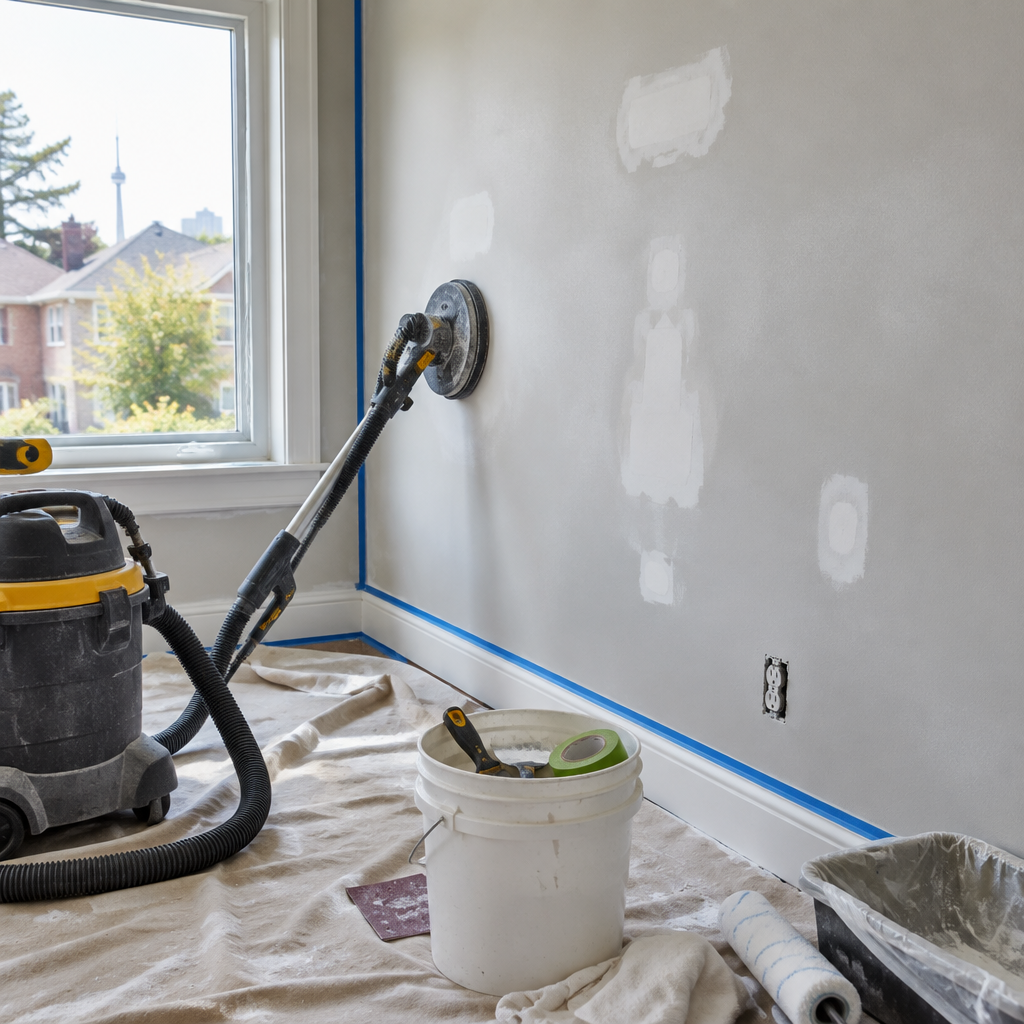
A smooth colour change can hide how much work happened before the first finish coat, yet preparation often determines whether the result looks professional. Strong planning for wall preparation before painting is rarely dramatic. It is measured, documented, and specific. The value of that discipline appears later through resolved details and fewer revisions, and a result that performs as intended.
Clean the contamination, not only the dust
Cooking residue, hand oils, smoke, bathroom film, and cleaning products can interfere with adhesion. The method should suit the surface and be allowed to dry before sanding or coating.
Repair movement and damage honestly
Nail pops, cracks, torn drywall paper, dents, loose tape, and failed caulk need different repairs. A flexible moving crack should not be treated like a shallow picture-hook hole.
Sand for profile and smoothness
Sanding levels fillers, softens ridges, and gives glossy areas a suitable profile. Dust extraction and final cleaning are part of the step because paint over sanding dust can fail or look rough.
Prime only where the substrate calls for it
Bare drywall, stains, porous patches, glossy surfaces, and material changes may need different primers. One generic coat is not a substitute for identifying the surface.
Planning for GTA conditions
Many GTA properties have walls repaired by several owners and trades. Side lighting from large windows can reveal ridges and patches that looked acceptable under construction lighting. The work described here is offered in the GTA, but the rules and physical limits remain local. municipalities such as Toronto, Mississauga, Brampton, Vaughan, Markham, Oakville, Burlington, and those in Durham Region can apply different review processes and property standards. Check the local requirements tied to the address before work begins.
How to make the next decision
A complete scope for wall preparation before painting should make sense to an owner outside the trade. It should state the starting condition and defined method, material standards, performance criteria, protection, cleanup, timing, and exclusions, and a completion check. Ask what may change once the area is opened and how any approval will be documented. If those points are settled before the work is booked, the owner can judge value without relying on a promise that everything normal is included.
Practical planning checklist
- Identify grease, smoke, moisture, and glossy areas.
- Agree on the repair standard for cracks and dents.
- Control and remove sanding dust.
- Match primer to each exposed substrate or stain.
The takeaway
Well-managed work has a simple logic: the condition is documented, the method fits it, and the finished result has a clear acceptance standard. Ask for the preparation scope in writing because it is the foundation of the finish. Speak with MLB Painting for a detailed GTA consultation.
