

Water, Smoke, and Tannin Stains Need More Than Paint
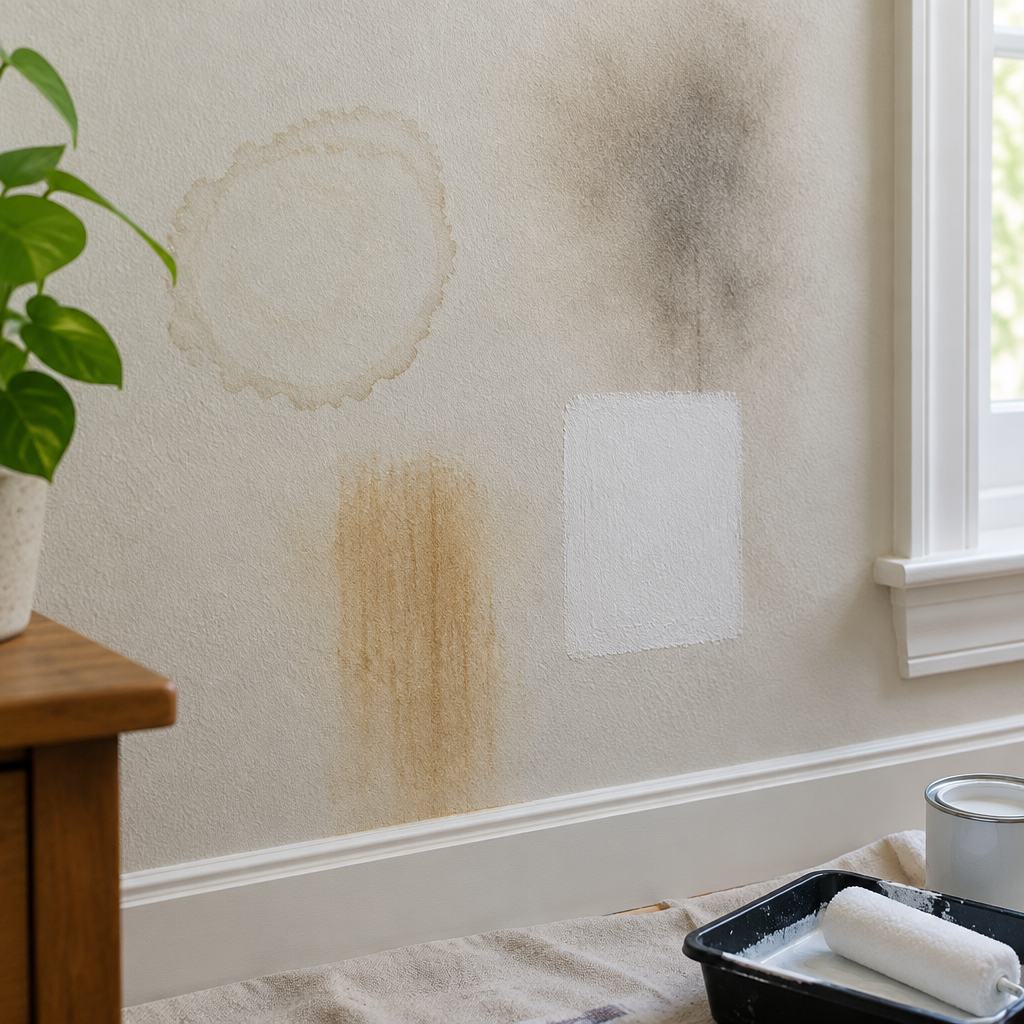
Some stains dissolve into a new water-based coat and reappear, even when the first pass looks clean and white. A sound decision about stain blocking primer in the GTA should resolve three basic questions: what condition exists now, what outcome is required, and how will the finished work be checked? Those answers keep the work grounded and make quotations easier to compare.
Stop the source before sealing the mark
A roof leak, plumbing issue, condensation, smoke exposure, or wood extractive must be identified first. Painting a damp or contaminated surface can trap the symptom and delay the necessary repair.
Classify the stain
Water rings, nicotine, soot, marker, rust, cedar tannin, and adhesive residue behave differently. The primer should be selected for that contaminant and the substrate rather than from a universal stain claim.
Clean and dry the surface
Loose material, soot, grease, and residue can prevent adhesion. Water-damaged drywall may need removal if it has lost strength or supports microbial growth; primer does not restore unsound material.
Test before coating the whole area
A small sealed patch can confirm whether the stain bleeds, whether odour remains, and whether the finish coat bonds. Follow ventilation, protective equipment, and recoat instructions for the chosen product.
Planning for GTA conditions
Older GTA homes can contain wood trim, plaster, past smoking residue, and repaired leaks in the same room. Each stained material may need its own cleaning and primer step. The GTA includes older urban houses, post-war bungalows, newer subdivision homes, condominiums, and mixed-use properties. That variety makes broad assumptions unreliable. For stain blocking primer in the GTA, verify the assembly and site conditions before choosing a method that worked on another home.
From site condition to written scope
A reliable plan for stain blocking primer in the GTA names the acceptance standard before work begins. That standard may be a passed inspection, a measured condition, an approved sample, a tested system, a clean visual plane, or a documented handover. The method should suit the property and the intended use, while the contract assigns responsibility for connected work. Clear acceptance criteria protect both the homeowner and the contractor because completion is based on evidence rather than memory.
Practical planning checklist
- Identify and correct the stain source.
- Verify the substrate is sound and dry.
- Match primer chemistry to the contaminant.
- Complete a small compatibility and bleed test.
The takeaway
Use planning to reduce uncertainty, not to rush past it. A stain is ready for paint only after its cause, contamination, and substrate condition are controlled. For an assessment within the Greater Toronto Area, visit https://mlbpainting.ca/ and request a consultation with MLB Painting.
