

How to Paint Over a Dark Colour Without Patchy Results
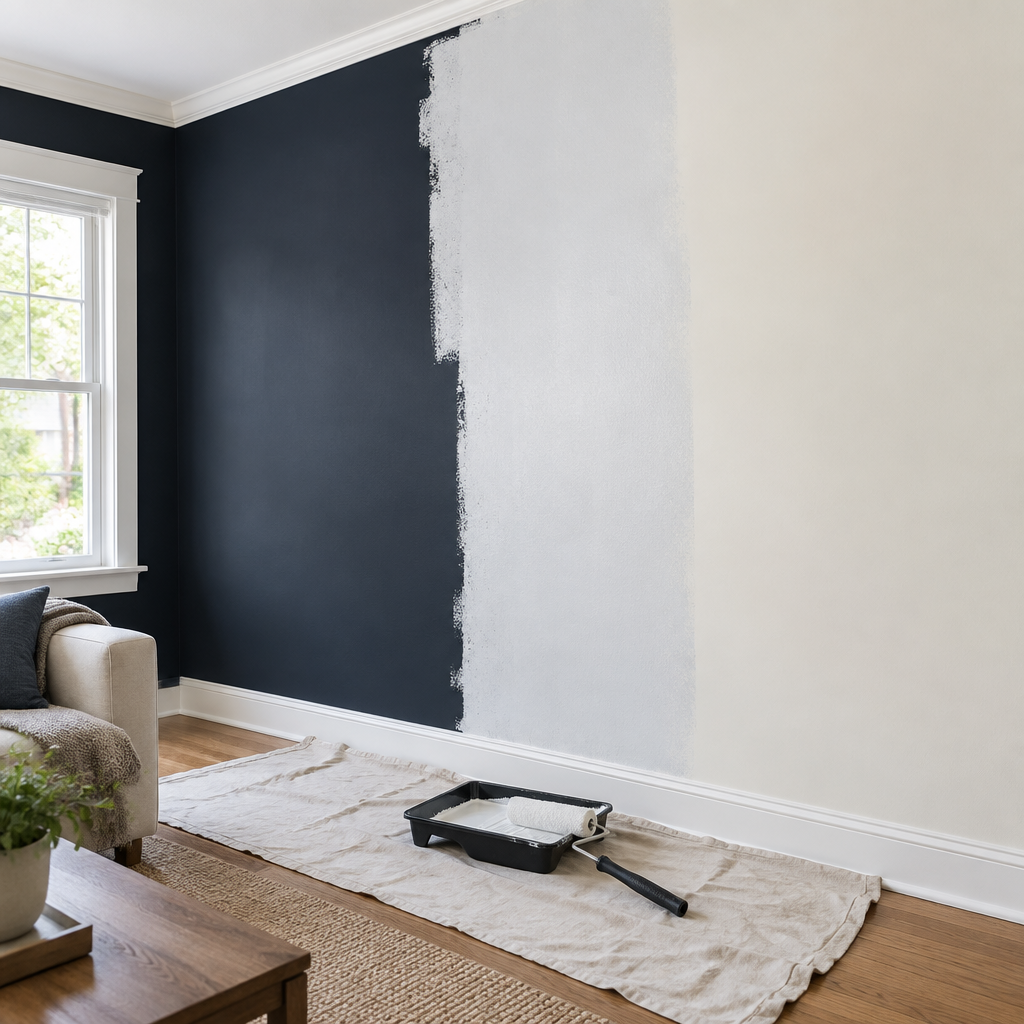
Covering navy, charcoal, burgundy, or saturated green is not just a question of buying a paint labelled for one-coat coverage. A standard detail cannot cover every case of paint over dark walls. The solution shifts with the property, its intended use, and surrounding materials, and the homeowner’s time horizon. A short discovery stage is therefore worthwhile before selecting finishes or approving a price.
Fix the surface before changing colour
Dark walls can hide dents in dim light yet emphasize them after a lighter colour is applied. Use side lighting to identify repairs, then sand and spot-prime them.
Choose the primer strategy from the colour shift
A suitable high-hide or tinted primer can create a more uniform base, especially over very deep tones or where patches have different porosity. The coating manufacturer can guide tint and compatibility.
Maintain wet edges and consistent film
Thin areas, dry rolling, and uneven pressure create flashing and colour variation. Work in manageable sections with the specified roller nap and recommended spread rate.
Judge coverage only after drying
Wet paint can look opaque before the film settles. Evaluate under daylight and room lighting after the stated recoat time, then apply another full coat where needed rather than chasing isolated wet spots.
Planning for GTA conditions
Low winter daylight and strong LED lighting can change how a light colour reads in GTA interiors. Sample and inspect the finish in the room, not only in a paint store. GTA projects are shaped by weather and access. Short exterior seasons, sudden rain, winter temperature swings, narrow side yards, shared driveways, and condo delivery rules can affect the plan for paint over dark walls. A workable schedule allows for those constraints rather than discovering them mid-project.
Turn the advice into a project scope
Before authorizing paint over dark walls, require the responsible team to connect the recommendation to photographs, measurements, product instructions, and the actual property. The written proposal should say which conditions were observed, which remain unknown, and what result the proposed work is expected to achieve. It also needs to identify work by other trades, inspection points, owner decisions, and the evidence used at final review. This amount of detail makes price comparisons more meaningful and helps prevent a broad allowance from becoming an open-ended change.
Practical planning checklist
- Inspect dark walls under strong side lighting.
- Confirm primer colour and compatibility.
- Use the correct roller nap and spread rate.
- Evaluate coverage dry, under several lighting conditions.
The takeaway
Resolve the cause, scope, and finish standard before booking the crew. Reliable coverage comes from a uniform base and full film build, not from stretching the final coat. MLB Painting serves GTA property owners and can prepare a site-based recommendation for the next step.
